
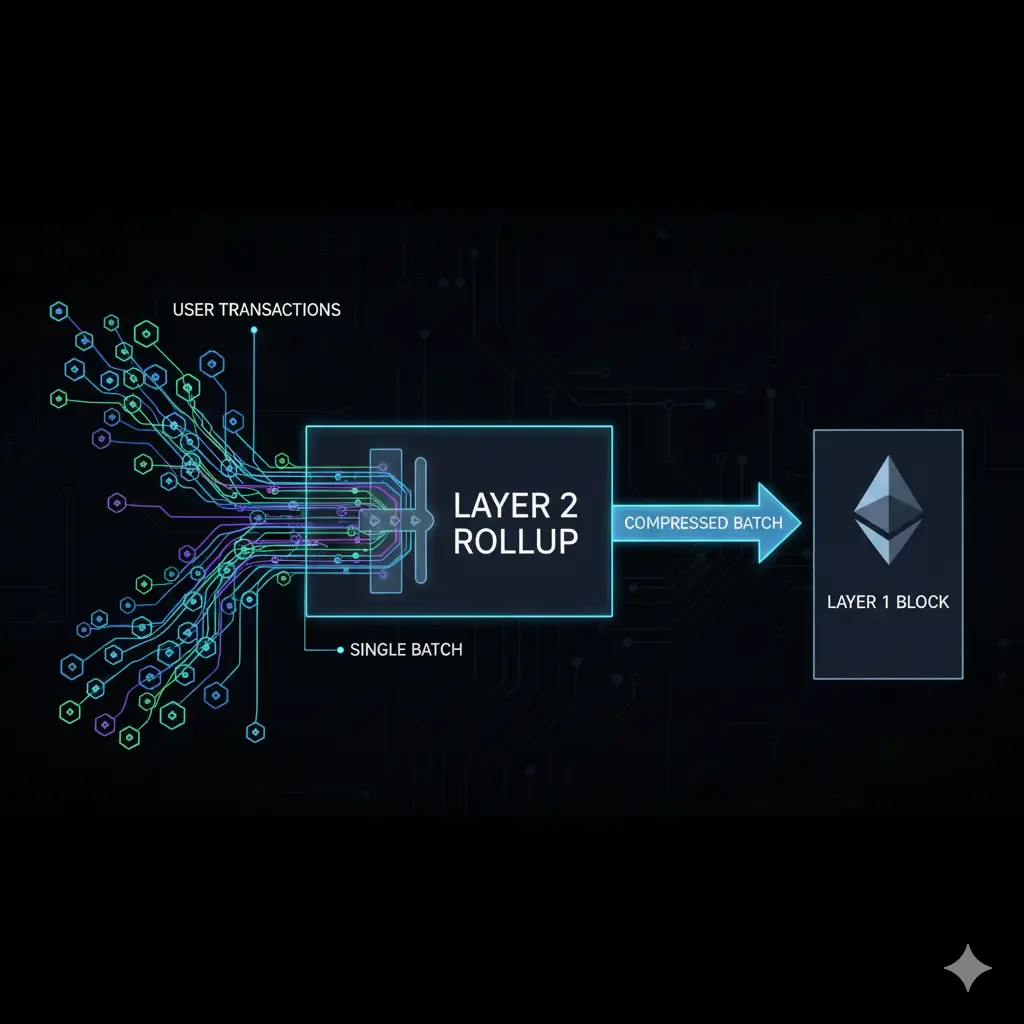

Most users interact with Ethereum through a Layer 2 rollup rather than the base Layer 1 chain. Rollups batch thousands of transactions, compress them and post the result back to Ethereum. Settlement is no longer a single step but a pipeline.
On a rollup a transaction passes through three phases. First it is executed in the rollup node, which gives you a local result. Next it is included in a batch that is posted to Ethereum. Finally there is a dispute window during which fraud proofs or validity proofs can challenge the batch.
From an application design perspective this means you should separate user experience finality from economic finality. A wallet can treat the rollup confirmation as soft finality and show an instant success state. Risk systems and large transfers should wait until the batch is finalised on the Layer 1 chain.
This layered settlement model is what allows blockchains to scale without breaking the trust assumptions of the base layer. For Coinslive readers the key idea is that gas fees may be low but the security model still depends on how quickly the rollup can prove its state back to Ethereum.