
Common Web3 Scams Beginners Must Avoid
Learn the most common Web3 scams beginners face, including phishing, fake wallets, and rug pulls, and how to stay safe online.
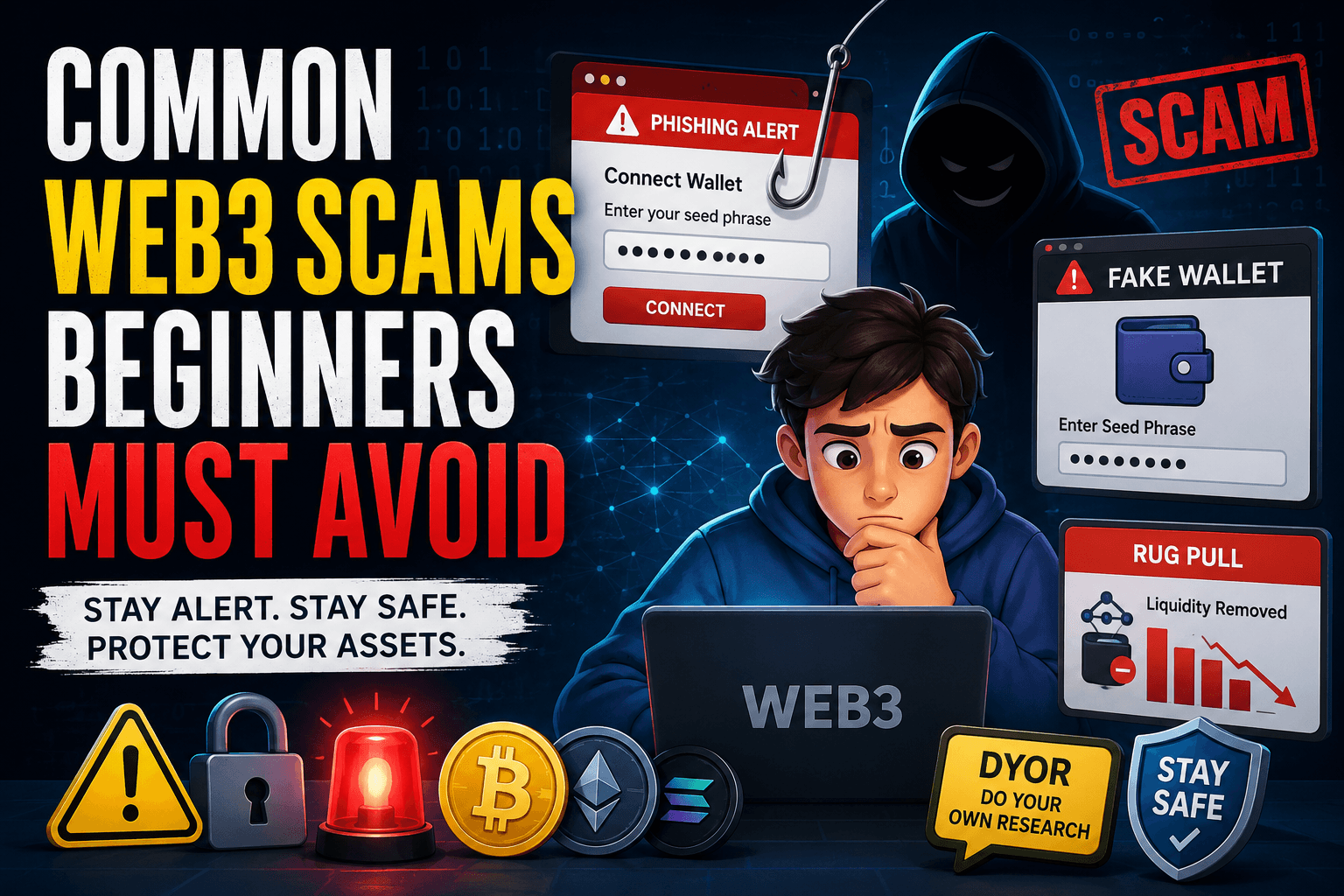
As Web3 systems have become more popular, they have opened up more chances for beginners, as well as students, to get into cryptocurrency. However, common Web3 scams on platforms targeted specifically at novice cryptocurrency traders is still ongoing. Researchers have reported increased incidents of phishing attacks and fake cryptocurrency projects that target novice users.
The scammer may pose as a reputable company by using their branding, website, and wallet interface design. New users usually connect their wallets to applications without verifying what permission is given to the application. With more students becoming interested in learning about blockchain technology, there are more warnings being raised regarding common Web3 scams.
How Phishing Scams Target New Web3 Users
Phishing scams remain one of the most common Web3 scams affecting beginner users. Scammers frequently build phishing websites, which mimic crypto exchanges, NFT platforms, and DeFi applications. These phishing websites generally ask victims to enter wallet recovery phrases or private keys. Once attackers get the data from users, they get complete access to user wallets.

According to cybersecurity firms that monitor blockchain scams, many phishing attacks are initiated through Discord channels, Telegram channels, X threads, and paid ads. Phishing airdrop campaigns are also prevalent among new cryptocurrency users who seek free tokens. In some cases, scammers pose as founders or developers of certain blockchain projects through cloned social media profiles.
Malicious smart contracts embedded in phishing sites are often concealed within wallet permission requests. By connecting their wallets with such contracts, users authorize criminals to spend their tokens.
Why Fake Crypto Wallets Continue to Spread
Another emerging problem in the Web3 ecosystem is fake wallet applications. The security specialists have revealed some fraudulent wallet applications on third-party distribution channels and maliciously cloned browser extensions. Such applications usually mimic the interface and brand identity of legitimate cryptocurrency wallets.
Once installed, fake wallet applications demand recovery phrases during the initialization phase. In this way, attackers will utilize the acquired information to steal crypto assets from the legitimate wallet. Some fake wallet applications even integrate malware that tracks clipboard history and substitutes wallet addresses during transactions.
Blockchain developers have reiterated the call to educate new users about downloading wallet applications only from reputable sources. There has been an increase in browser extension attacks as people increasingly transact with decentralized applications using desktop wallets.
Educators who specialize in cryptocurrency security have suggested that students and newcomers to Web3 activate two-factor authentication when possible and verify wallet URLs before downloading any software. It is also recommended to avoid private messaging channels containing links for wallet setup procedures or security threats.
How Rug Pull Scams Trap Beginner Investors
Rug pull scams continue to thrive in DeFi and meme token ecosystems. In most cases, rug pulls begin by developers launching a token and attracting investors before removing all liquidity from the pool. With no more liquidity, the value of tokens plummets, and investors can’t sell their positions.

Various blockchain monitoring services have pinpointed several types of rug pull activities on newly-launched blockchain projects. Such projects include those with anonymous developers and no prior history of development. There are also those with unrealistic token earnings and NFT rewards or staking benefits guaranteed to investors.
Projects behind these rug pulls often engage in vigorous marketing on social media networks such as X, Discord, and Telegram. In some cases, the combination of influencer marketing techniques can lead to false trading volumes for a particular project. New investors may misunderstand the rise in trades as a natural phenomenon within the market.
Security analysts advise that an individual should look into matters such as liquidity lock on tokens, smart contracts, and wallets. Blockchain projects can also be verified via open-source audits of smart contracts and projects.
Simple Web3 Security Tips Beginners Should Know
Blockchain instructors still advise students to adhere to the fundamental principles of safety when dealing with blockchain technologies. First, users must never disclose their recovery seeds at any time. No reputable wallet provider or exchange asks for users’ private keys in emails or direct messages.

Security experts also advise that one use hardware wallets for large cryptocurrency balances. This is because hardware wallets store private keys offline, meaning that they cannot be targeted by phishing campaigns and malicious browser software.
Final Thoughts
Since blockchain is being adopted by more younger people, it becomes increasingly clear that there will be increased awareness of common Web3 scams. As per cybersecurity specialists, novice users who comprehend phishing attacks, scam wallets, and rug pulls can navigate the realm of decentralized systems with less worry.