
Why GCCs Struggle to Ship Innovation at Scale
GCC innovation challenges continue as execution outpaces ownership. Learn why GCC product teams struggle to ship scalable innovation.
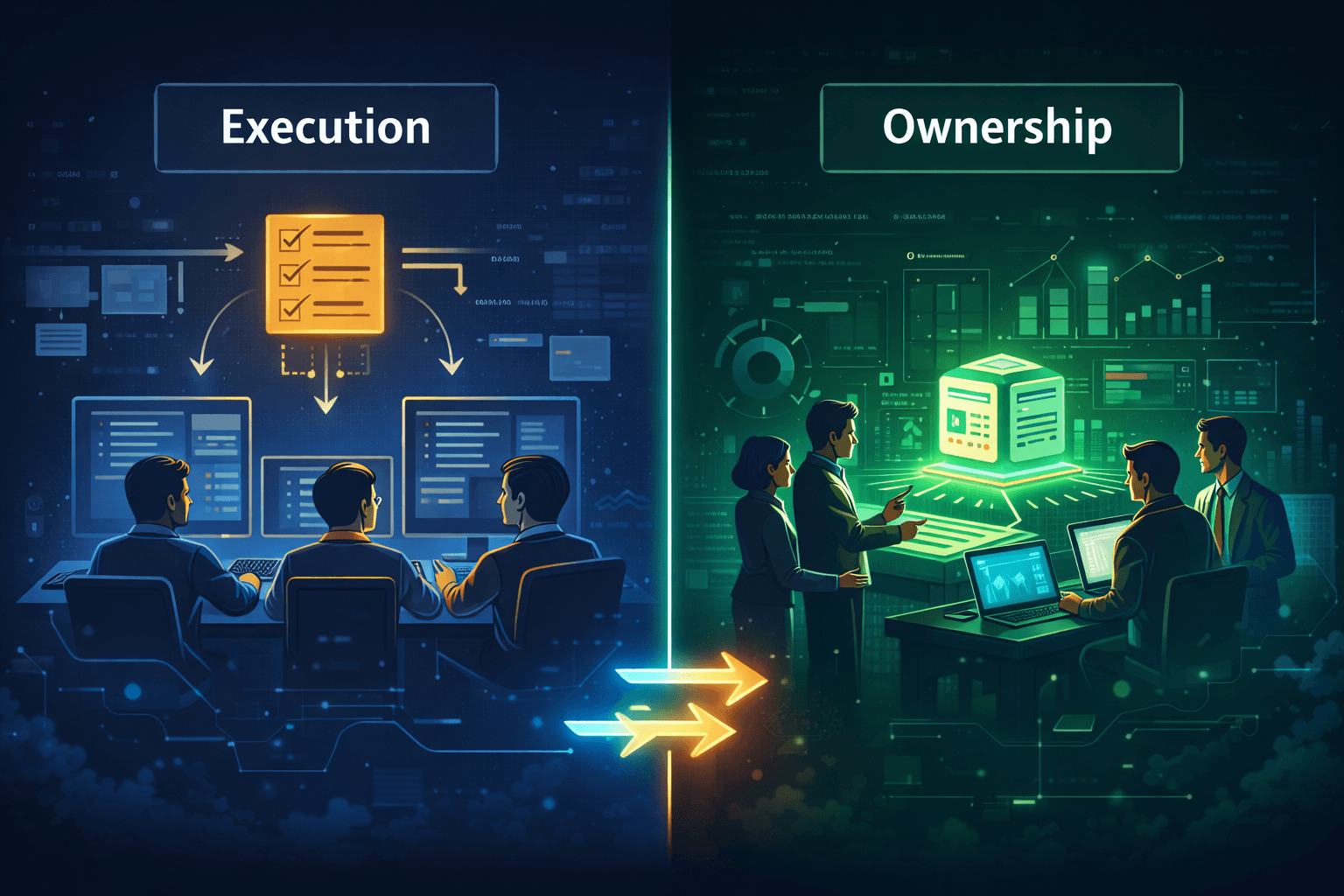
GCCs have continued to grow in terms of scope within the domain of enterprise technology management, but GCC innovation challenges still exist when the goal is to increase the volume of products that an organization can produce. This can be seen in the experiences reported by engineering forums, enterprise-level meetings, and product team members alike. This gap has slowed the ability of GCC product teams to deliver independent innovation despite strong technical resources.
Execution Capacity Expands Across GCC Product Teams
Engineering discussions sourced from enterprise communities indicate that global capability centers innovation efforts have scaled in execution. Teams are now dealing with huge amounts of development efforts, which include back-end services, APIs, and tooling engineering. This is due to increased confidence in the GCC delivery capabilities.
However, reports from product teams show that execution remains tied to predefined requirements. Most tasks originate from headquarters or external stakeholders. Engineers complete assigned work with accuracy, yet the absence of ownership restricts contribution to product direction. As a result, systems are delivered on time but lack iterative improvement cycles.
Product Ownership Remains Centralized Outside GCCs
The observations made by senior engineers and product managers through professional networks indicate that the ownership of products in GCC is usually external to the teams. Roadmaps, feature priorities, and design decisions are managed by central product units. GCC teams operate within fixed boundaries.

This structure limits decision-making speed. When changes are required, approvals must pass through multiple layers. Discussions from engineering threads note that this delay affects innovation cycles. Without direct ownership, teams focus on delivery metrics instead of user outcomes, reinforcing GCC innovation challenges.
Enterprise Constraints Shape Innovation Execution Gap
Product development within GCCs is always based on strict operational models. Such models are focused on stability, consistency, and predictability. Although such an approach ensures reliability, it leaves little room for experimentation.

Information revealed during engineering discussions demonstrates that the larger a product team becomes, the greater the cost of coordination will be. Various teams need to utilize common services, making integration more difficult. In many cases, internal tooling engineering projects get delayed because of dependency issues.
Engineering Metrics Focus on Output Over Innovation
From product leadership conversations, one can infer that engineering productivity at GCCs is assessed using delivery time and feature completion. These are execution-focused measures that do not factor in the organization’s innovative capabilities.

Without performance measures associated with innovation, individuals work towards meeting their output goals. In developer reports, the need for autonomy, quicker feedback cycles, and result accountability emerges in relation to innovation. Lack of these conditions leads to an increased innovation execution gap at GCCs.
Final Thoughts
Innovation challenges in the GCC space continue to arise because of fundamental disconnects between execution and ownership. It becomes important for firms to ensure that their teams are not only responsible for execution but also have ownership of the products being developed.