
From Web2 to Web3: How Junior Developers Can Start Building Smart Contracts Without Getting Lost
The shift from conventional development towards decentralization still remains an area of fascination for young engineers. Conversations within developer circles have shown increased interest in the field of in web3 smart contracts, along with queries regarding tools, security, and learning pathways. Posts made by developers on forums like X reveal that many newbies share common […]
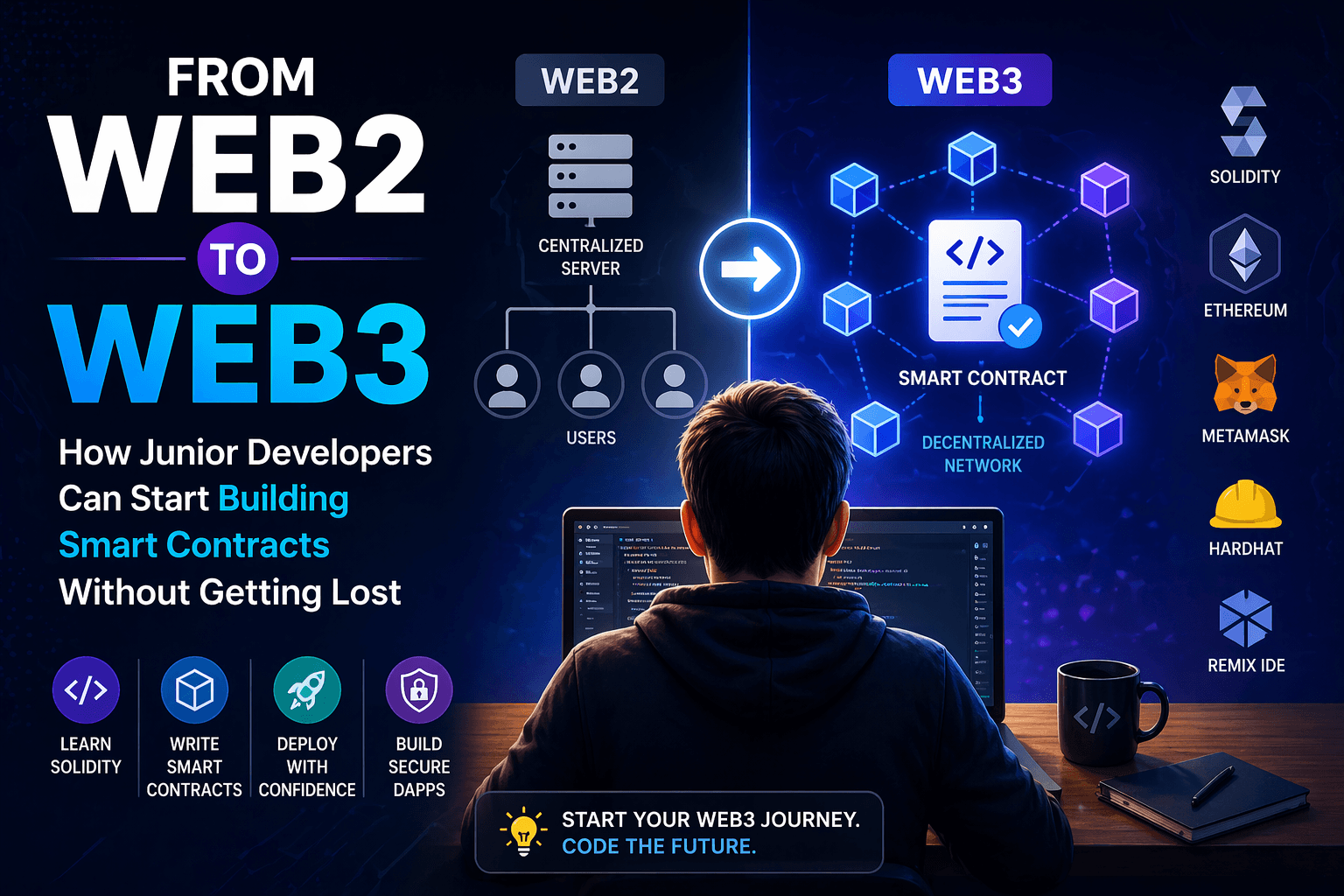
The shift from conventional development towards decentralization still remains an area of fascination for young engineers. Conversations within developer circles have shown increased interest in the field of in web3 smart contracts, along with queries regarding tools, security, and learning pathways. Posts made by developers on forums like X reveal that many newbies share common problems during the shift from web2 to blockchain platforms.
Rising Interest in Web3 Smart Contract Development Among Juniors
Early career developers have begun experimenting with web3 smart contract development as blockchain-based applications become more prevalent. Developers’ conversations on X reveal queries regarding Solidity programming language, testing methodologies, and deployment mechanisms. In some cases, developers cite issues related to blockchain architecture and comparison with well-known Web2 architectures.
Concurrently, learning materials and open-source repositories have been rising. Programmers exchange pieces of code, contract blueprints, and troubleshooting techniques. This effort seeks to make blockchain technology less intimidating for newcomers. Nonetheless, many of these conversations highlight shortcomings related to fundamental blockchain concepts like immutability and gas fees.
Technical Shift From Web2 Systems to Blockchain-Based Logic
Smart contract creation in Web3 brings about a different execution environment. While in Web2 development, applications depend on central servers for execution, in Web3 smart contracts execute within distributed networks like Ethereum. Contracts execute within nodes, and their deployment makes it impossible to make modifications without specified measures.

This calls for new methods when developing. First, transactions in blockchain networks attract charges, and developers will need to ensure efficient contract creation to minimize the computation cost. Additionally, storage becomes another consideration as it needs to be handled carefully due to the constraints and limits of the network.

Additionally, transparency is an aspect that developers need to consider. Once deployed, contracts become public. Therefore, developers must consider how to address adversarial actions such as reentrancy attacks and integer overflow among others.
Common Challenges Reported by Early-Career Developers
In the discussions surrounding X, there are certain recurring problems encountered by newcomers to web3 smart contracts. The most common problem reported by many is that of understanding asynchronous transaction flows. Unlike Web2 APIs, blockchain transactions take time to confirm, affecting app logic.

There have been difficulties when testing contracts. Many developers depend on development tools like Hardhat or Foundry, but misconfiguration causes wrong predictions. Many comments have pointed out failed contract deployments caused by wrong network or inadequate gas settings.
Safety measures have also come up repeatedly in the forums. Developers point out the dangers posed by deploying non-tested contracts. There have been instances where funds were lost during testing or abnormal behavior exhibited by deployed contracts.
Tools and Learning Approaches Gaining Traction
Newcomers into web3 smart contract development are still using certain tools to help improve their processes. Tools such as Remix, which is browser-based, facilitate writing and deploying smart contracts without too much setup for newcomers. On the other hand, wallets such as MetaMask help interact with DApps.
Learning from the community also takes place. Many developers post guides on how to create smart contracts on sites like YouTube. They include how to use test nets to deploy smart contracts before interacting with the main net.
Collaboration within the open source community has also increased. Newcomers can join repository projects, audit existing smart contracts, and recreate actual use cases. This method helps junior developers learn by doing in real-life situations, such as creating token contracts or DeFi applications.
In conclusion, the large amount of discussions and resources created suggests that web3 smart contract development still holds some interest among new developers.