
How AI And Web3 Hackathons Are Becoming the Fastest Path Into Tech Careers
AI & Web3 Hackathons are helping students and freshers gain skills, build portfolios, network, and land tech careers faster.
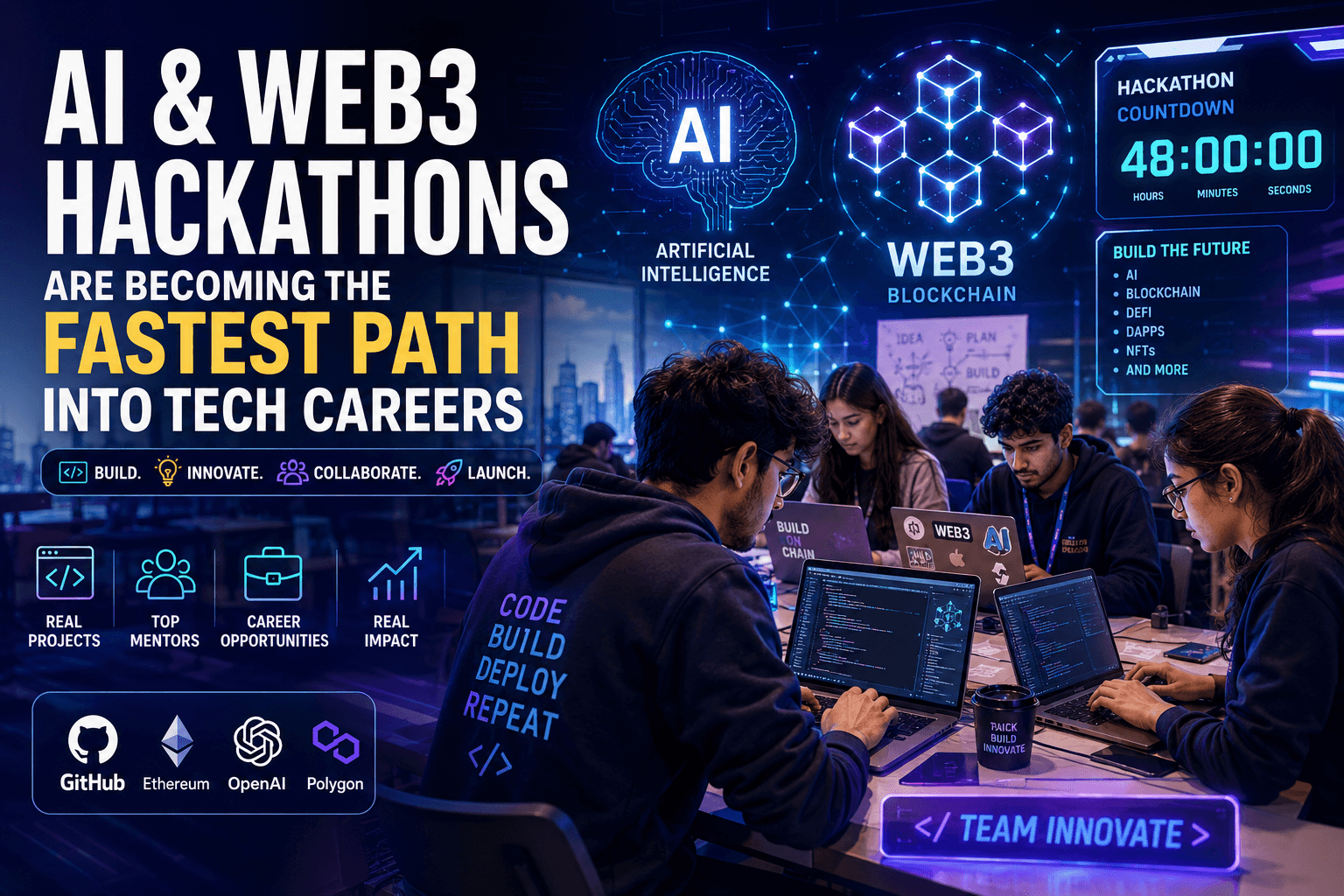
AI and Web3 hackathons are becoming more popular among students, recent graduates, and self-taught programmers looking for quicker access to tech jobs. The event organizers, software developer networks, and Web3 firms will further develop such initiatives, as corporations look for candidates who have hands-on experience over bookish knowledge alone.
This phenomenon has evolved in tandem with the growing need for AI-powered platforms, decentralized apps, and blockchain technology. The current trend sees many hackathons geared toward actual product development, enabling participants to create real-world products within a limited period.

Hackathons Shift Focus Toward Practical Skills
Hiring practices for tech jobs have evolved in several industries. Organizations now consider portfolios, GitHub contributions, and teamwork skills in the hiring process. Consequently, AI and Web3 hackathons have become critical for skill development and experience in developers.
Hackathons generally involve creating fully functional products involving artificial intelligence models, blockchain technology, cloud computing, and front-end technologies. Competitors develop decentralized finance interfaces, AI-based automation tools, blockchain-based smart contract platforms, and digital identity solutions during hackathons.
During blockchain hackathons, developers employ blockchains compatible with the Ethereum Virtual Machine, Solidity programming language, and decentralized file storage technologies. Hackathons centered around artificial intelligence may involve machine learning libraries, natural language processing algorithms, vector storage solutions, and automation processes.
This approach facilitates the exposure of beginners to real-world technologies under tight deadlines.
Students and Freshers Use Hackathons for Career Access
Students ready for placements and new graduates are turning their attention to AI and Web3 hackathons to increase their chances of employment. The participants of these hackathons are often individuals who lack professional experience in the industry.
The hackathons usually organize mentorship, training, and networking sessions with startups. Moreover, the organizing teams collaborate with venture capitals and the development ecosystem to help the best projects emerge after the hackathons.
Web3 networks have made use of social media platforms to encourage participation from novice developers in hackathons. A few event organizers have posted messages to motivate students to join hackathons without any previous experience in coding.
Self-educated developers and boot camp learners use these hackathons to showcase their abilities through public demonstrations. The recruiters regularly review the projects and live demonstrations submitted by the participants, along with links to their GitHub accounts.
The hackathons present an excellent platform that brings recruiters face-to-face with developers without going through the usual process of applications.
AI and Web3 Hackathons Gain Technical Depth
AI and Web3 hackathons are more technically complex compared to previous coding hackathons. Many hackathon organizations require developers to incorporate several technologies within one application.
This includes:
- Execution of smart contracts
- Models for inference by AI algorithms
- Wallet systems for authentication purposes
- On-chain analysis and analytics
- Orchestration of API calls
- Decentralized databases
- Deployment infrastructure in the cloud
Some of the frameworks that developers use during hackathons include LangChain, TensorFlow, OpenAI APIs, Hardhat, and decentralized indexing systems. In some cases, applications are deployed in the Layer 2 blockchain network to avoid paying high fees.

Some of the hackathons that exist today incorporate categories dedicated to autonomous AI bots, decentralized AI markets, and machine-generated blockchain verification systems. These categories show industry interest in implementing decentralized technologies with AI technologies.
Developers participating in such hackathons acquire experience in distributed computing, smart contract security, data pipelines, and frontend integration processes.
Tech Companies Monitor Hackathon Talent
The practice of organizing hackathons as means of identifying talent is still widely adopted by startups and enterprises. Firms hosting AI and Web3 hackathons usually provide contestants with real-world challenges to test their coding skills.
Some of those firms hire participants immediately after looking through project demonstrations. Others include participants in various programs, like accelerators or development networks associated with grant programs.
Organizers can use hackathons to assess contestants’ abilities to work together, debug their products, and create projects under pressure. Hackathons give companies opportunities to see how developers perform under stress conditions.
Final Thoughts
AI infrastructure and blockchain development have continued to increase the demand for engineers who have practical experience. With increasing adoption of decentralized apps and AI systems by companies, hackathons have been among the most promising entry points to tech jobs for new programmers.