
Autonomous Agents in Crypto Portfolio Management: Can AI Outperform Humans?
Explore how autonomous agents in crypto portfolio management are transforming AI trading, automation, risk analysis, and DeFi investing.
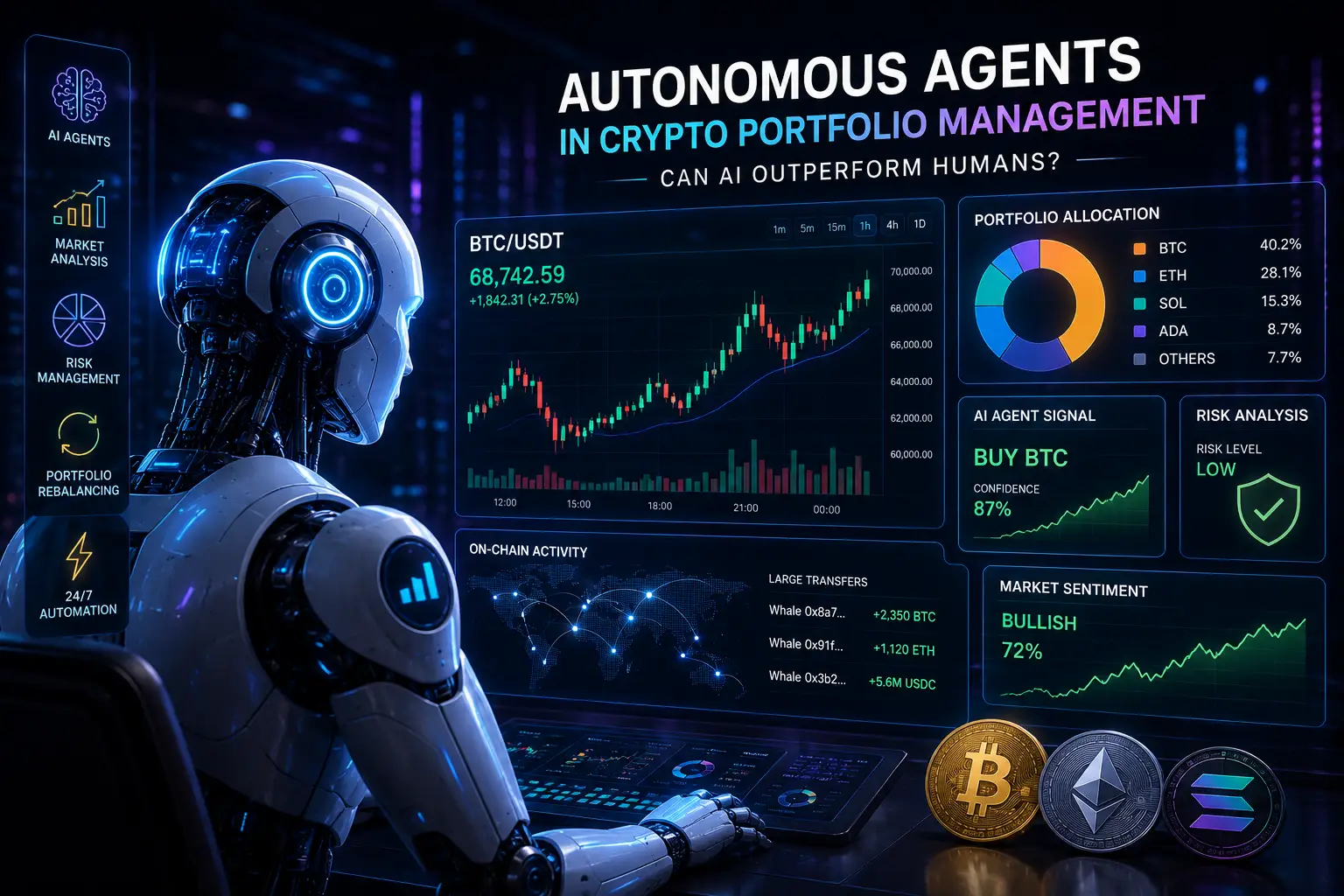
Autonomous agents in crypto portfolio management are being considered since trading companies as well as blockchain engineers are incorporating artificial intelligence in digital currency markets. AI-based technologies will be capable of monitoring price fluctuations, placing trades, portfolio rebalancing, and blockchain transaction analysis without human intervention constantly. The reason behind this is the 24/7 nature of the cryptocurrency market where programmers began to test possibilities that enable them to work faster than humans.

The growth of autonomous agents in crypto portfolio management comes as AI infrastructure improves across the blockchain sector. Companies that are engaged in creating AI trading agents to trade cryptocurrencies use machine learning and reinforcement learning when building an algorithmic trading system. However, despite these approaches speeding up decision-making, researchers and cybersecurity experts are analyzing the reliability and risks associated with using these trading systems.
How Autonomous Agents in Crypto Portfolio Management Work
Autonomous agents in crypto portfolio management operate through AI models connected to exchanges, blockchain networks, and decentralized finance protocols. These systems analyze market data in real-time by detecting trade opportunities through predictive modeling and executing trades through automated execution models. Most of the platforms today use algorithmic cryptocurrency trading models along with blockchain tracking systems for making quick investment decisions.

A number of autonomous AI portfolio management systems include memory units containing previous outcomes of trading and market data. Autonomous AI traders can analyze past data against current market data and then make necessary adjustments to their trading strategies. Multi-agent systems are also used where each of the AI models specializes in a different task such as risk management, liquidity management, and executing trades.
Reinforcement learning is also being used by AI cryptocurrency trading agents today. Systems use their trading strategies according to their performance along with market trends and outcomes. The autonomous trading systems are able to rebalance their digital assets depending upon their volatility and predefined risk levels.
Some blockchain firms now use autonomous agents in crypto portfolio management to track whale wallet movements and token transfers across exchanges. Moreover, such trading bots can leverage artificial intelligence to assess the social sentiment through forums such as X and Reddit to gauge short-term momentum in the market before initiating any trade.
DeFi Platforms Expand Use of AI Trading Agents
The rise of decentralized finance has accelerated the adoption of autonomous agents in crypto portfolio management. The many decentralized finance projects provide an AI yield allocation service that moves money into staking, lending, and liquidity pools after some periods. Such platforms try to optimize returns without much human management.
In this case, the AI portfolio manager evaluates opportunities in several blockchains. The current automated AI bots evaluate the price disparity and liquidity ratios of Ethereum, Solana, and Layer-2 chain. The fast transaction speed on blockchains makes it possible for automated trading bots to perform transactions within seconds in fluctuating markets.
Some crypto trading bots incorporate the capabilities of natural language processing to assess governance decisions, balance sheets, and market news before allocating funds. The teams behind AI services keep innovating on methods to access databases on blockchains by the automated trading bots.
At the same time, developers remain focused on security and reliability. Engineers testing autonomous agents in crypto portfolio management are building monitoring systems designed to reduce false signals and prevent manipulation attempts within automated trading environments.
Risks Continue Surrounding Autonomous Trading Systems
Despite growing interest, autonomous agents in crypto portfolio management still face technical and operational challenges.Cryptocurrency markets remain quite volatile; therefore, difficulties can arise for AI systems that strive to maintain their efficiency in a rapidly changing environment. Low liquidity or any other coordinated trading might additionally affect the outcomes of investment conducted by AI systems.
The effectiveness of artificial intelligence bots depends heavily on the quality of training data and models employed. The use of poor-quality databases can result in false forecasts and incorrect modifications of portfolios. As some experts suggest, reinforcement learning algorithms will not provide proper advice when market trends significantly differ from those observed in the past.

The problem of security should not be underestimated when it comes to AI agents operating within a decentralized network. The danger of smart contracts’ manipulation and compromised APIs is possible for the automated trading process.
Regulators are also monitoring the expansion of autonomous agents in crypto portfolio management across global digital asset markets. Financial regulators are still exploring how AI-based trading systems should be integrated into current compliance regimes. As AI-based trading systems become more sophisticated, the debate surrounding accountability and transparency is likely to persist within the cryptocurrency industry.
Final Thoughts
Autoagents for crypto portfolios keep influencing the operation of trading platforms for digital assets through both centralized and decentralized exchanges. With the development of infrastructure for artificial intelligence, programmers are enhancing automation of portfolio management and trading platforms. Despite increasing popularity of such innovations, problems with their reliability and safety still arise.